





| IN A NUTSHELL |
|
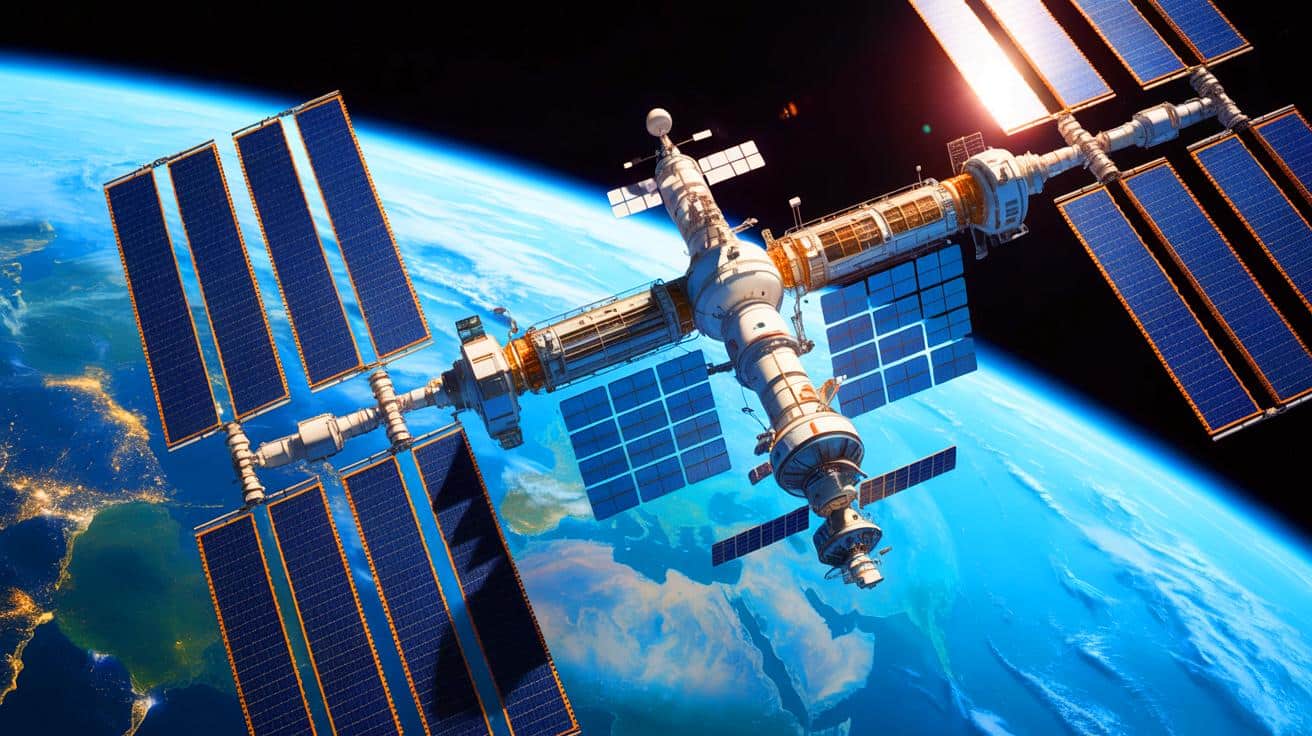
The International Space Station (ISS) has long served as a symbol of international collaboration and scientific advancement. Since its inception in 1998, it has facilitated over 4,000 scientific experiments, leading to groundbreaking discoveries in fields ranging from human physiology to material science. As we approach the ISS’s planned decommissioning in 2030, questions arise about what comes next for humanity’s presence in low Earth orbit. With NASA’s evolving priorities, including the ambitious Lunar Gateway project, the future of space exploration is shifting towards a more commercial and privatized model. This transition raises both opportunities and challenges as we look to the stars.
The Legacy of the International Space Station
For over two decades, the ISS has been a beacon of international cooperation. Launched in 1998, it has seen contributions from space agencies worldwide, including NASA, ESA, Roscosmos, JAXA, and others. The station has provided a unique environment for conducting experiments that cannot be replicated on Earth, thanks to its microgravity conditions. Scientists have used the ISS to study the effects of long-duration spaceflight on the human body, crucial for future missions to Mars and beyond.
Beyond scientific research, the ISS has served as a testing ground for new technologies. It has taught us how to maintain life support systems and manage international collaborations in space. These lessons are invaluable as we look towards more ambitious projects, such as the Lunar Gateway and potential Mars missions. The ISS has also been instrumental in inspiring a new generation of scientists, engineers, and astronauts, showcasing the possibilities of human ingenuity and perseverance.
NASA's New Direction: Lunar Gateway
As the ISS nears the end of its operational life, NASA's focus is shifting towards the Lunar Gateway. This new project is part of the broader Artemis program, which aims to return humans to the Moon and establish a sustainable presence there. The Lunar Gateway will serve as a smaller, more focused version of the ISS, orbiting the Moon and providing a staging point for lunar exploration missions.
However, the future of the Lunar Gateway is not without uncertainty. It relies heavily on political and financial support, which can fluctuate with changes in government priorities. Despite this, the Gateway represents an exciting new chapter in space exploration. It promises to extend humanity's reach beyond low Earth orbit and pave the way for future missions to Mars and potentially beyond.
Commercialization of Low Earth Orbit
With NASA stepping back from operating a space station in low Earth orbit, the stage is set for private companies to step in. The Commercial LEO Destinations program aims to foster private investment in space stations, with NASA acting as a customer rather than an operator. This model has already seen success with the Commercial Crew Program, which led to the development of the Falcon 9 rocket and Dragon spacecraft by SpaceX.
Several companies are vying for a role in this new era of space exploration. Notable contenders include Orbital Reef, a joint venture by Blue Origin and Sierra Space, and Starlab, a collaboration between Voyager Technologies and Airbus. However, Axiom Space appears to be leading the pack. Axiom plans to attach its first module to the ISS by 2027, eventually detaching it to form its own station, potentially with twice the usable volume of the ISS.
The Role of Private Companies in Space Exploration
The involvement of private companies in space exploration is not entirely new, but it represents a significant shift in how we approach space missions. The privatization of space stations could lead to a range of new opportunities, from space tourism to manufacturing in microgravity. Axiom Space, for instance, has already conducted missions with private astronauts to the ISS, preparing for its eventual role as a space station operator.
This commercial approach could democratize access to space, allowing more entities, including educational institutions and small businesses, to conduct research and develop new technologies. However, it also raises questions about regulation, safety, and the equitable distribution of space resources. As private companies take on more prominent roles, international collaboration and governance will be crucial to ensure space remains a domain for peaceful exploration and shared benefit.
As we transition from the era of the International Space Station to a new phase of space exploration, the challenges and opportunities are immense. The shift towards commercial space stations reflects a broader trend of privatization in space, promising innovation and accessibility. However, it also necessitates new frameworks for international cooperation and governance. How will this evolving landscape shape the future of space exploration, and what role will public and private entities play in this next chapter?

Will private companies really be able to maintain the same level of safety as NASA? 🤔
Wow, can’t believe the ISS is ending! What will happen to all those amazing experiments? 🤔
C’est dommage de voir la collaboration internationale se terminer. Quelles en seront les conséquences?
Privatizing space sounds risky. Who will ensure safety and regulation?
Private companies in space? Sounds like a sci-fi movie coming true!
NASA moving to the Moon with the Lunar Gateway is exciting! Hope they keep us updated.
Thank you for the insightful article. It’s fascinating to see how space exploration is evolving.
Are private companies really ready to take over the space station operations?
La NASA a-t-elle vraiment le choix d’abandonner l’ISS avec tous les progrès réalisés là-bas?
Merci pour l’article, c’est fascinant de voir comment l’exploration spatiale évolue! 😊
Is it possible that the Lunar Gateway could be delayed due to political changes?
What if something goes wrong with these new private stations?
Avec SpaceX et Blue Origin en lice, l’avenir des stations spatiales semble prometteur!
Seems like Axiom Space is ambitious. Can they really replace the ISS by 2027?
I hope this means we will see more scientific discoveries in the future! 🌌
Why is NASA focusing so much on the Moon instead of Mars?
The shift to privatization is exciting but also a bit worrying. Who will oversee these companies?
J’ai toujours rêvé de voir un jour des touristes dans l’espace. Est-ce que ça pourrait arriver bientôt?
Bravo à la NASA pour toutes ces années de découvertes avec l’ISS. Je suis sûr que le prochain chapitre sera encore plus excitant.
Will the new private stations be open to international collaboration like the ISS?
Les entreprises privées devront-elles respecter les même réglementations que la NASA?
The Lunar Gateway sounds like a stepping stone to Mars. Can’t wait to see it in action! 🚀
C’est impressionnant de voir comment l’espace devient de plus en plus accessible.
Do you think this shift will make space travel more affordable in the future?
J’espère que les scientifiques du monde entier continueront à collaborer dans l’espace.
Will Axiom’s new station really be twice the size of the ISS? That’s incredible!
This new era of space exploration could lead to amazing innovations. 🌟
Y aura-t-il encore des missions pour étudier les effets sur le corps humain dans l’espace?
It’s a bit sad to say goodbye to the ISS, but exciting times are ahead!
How will NASA ensure that commercial space stations maintain high standards of research?
Avec la privatisation, est-ce que les missions spatiales resteront pacifiques?
Can anyone explain what the Commercial LEO Destinations program is about?
The ISS has been an icon of cooperation. I hope this spirit continues. ❤️
Les entreprises privées vont-elles vraiment réussir à remplacer l’ISS d’ici 2030?
Space tourism is closer than ever. I wonder how much a ticket will cost. 😂
Est-ce que la NASA prévoit d’autres projets aussi ambitieux que l’ISS?
I’m cautiously optimistic about the future of space exploration. Fingers crossed! 🤞
Will the new space stations have the same research capabilities as the ISS?
La NASA nous surprendra toujours avec ses projets ambitieux. Hâte de voir ce qui nous attend!
The article is very informative. Thank you! 😊
What about the environmental impact of these new space stations?