




| IN A NUTSHELL |
|
In a rapidly evolving space landscape, the United States is making significant strides in satellite technology, aiming to maintain its competitive edge. Recent announcements from defense technology company Anduril Industries and propulsion startup Impulse Space have marked a pivotal moment in satellite innovation. Their collaboration on a demonstration satellite designed for rendezvous and proximity operations (RPO) is set to revolutionize how satellites maneuver in space. As global powers like China continue to advance their satellite capabilities, the U.S. is accelerating efforts to enhance space awareness and defense. This collaboration is not just about innovation; it’s a strategic move in an increasingly contested domain.
Impulse’s Role and Technology
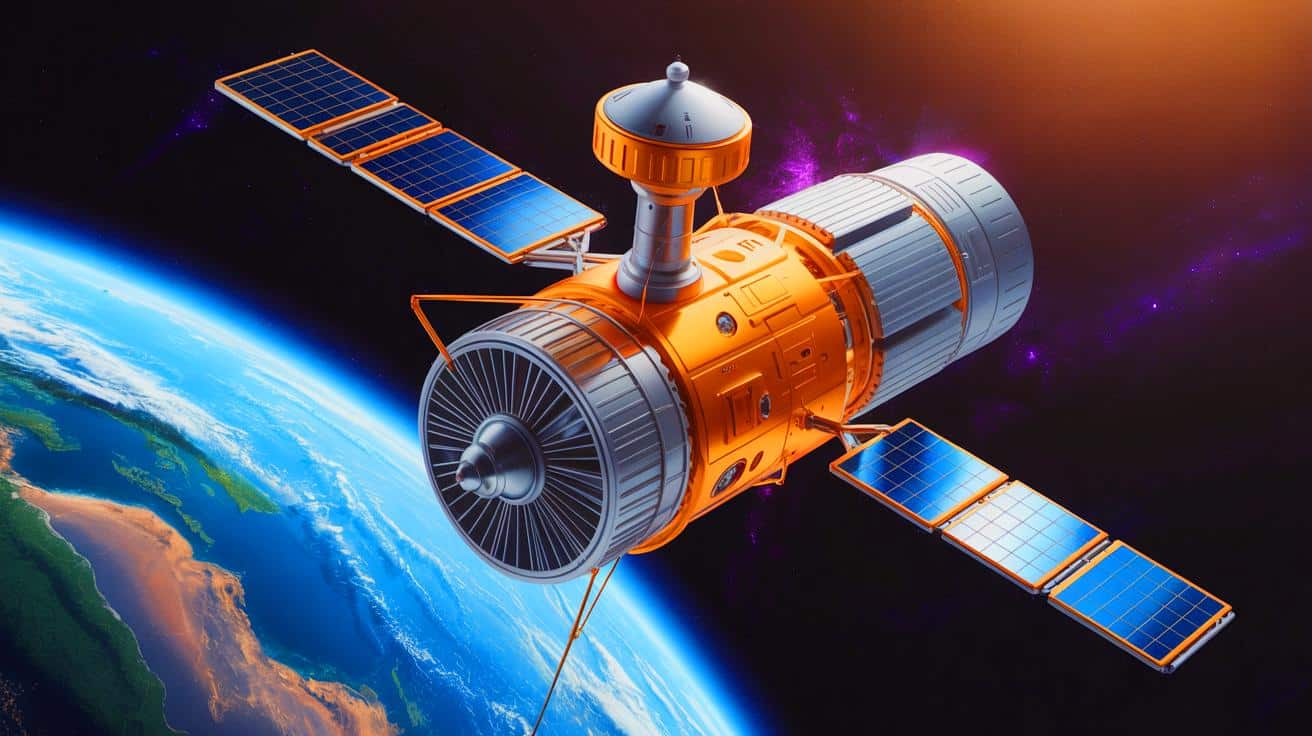
Impulse Space is spearheading the propulsion technology that will power the new satellite’s capabilities. At the heart of their offering is the Mira spacecraft, which is integrated with the Helios kick stage. This system, powered by the Deneb engine, is designed to act as a rapid transport mechanism, shifting satellites from low Earth orbit (LEO) to geostationary orbit (GEO) in under 24 hours. This is a significant reduction from the months typically required for such maneuvers.
Geostationary orbit, located approximately 36,000 miles above the Earth, is a critical zone for many military and communication satellites. Impulse Space has secured contracts worth millions, including a $34.5 million deal with the Space Force and Defense Innovation Unit, to develop rapid-response capabilities. Their technology aims to compress extensive orbital transfers into just a few hours, thereby enhancing the flexibility and responsiveness of U.S. space operations.
According to Impulse president Eric Romo, the design of the spacecraft allows for adaptations that would enable operations in LEO, offering versatility across various missions. This adaptability is crucial as it provides a multi-mission platform for future space endeavors.
Anduril’s Contribution
Anduril Industries is contributing the mission payloads, which include sophisticated imaging and processing technology. The payload comprises a long-wave infrared (LWIR) imager and a mission data processor based on Anduril’s Lattice software. These tools are essential for satellite tracking and identification, especially under challenging conditions such as eclipses when sunlight is absent.
The LWIR imager enhances the satellite’s ability to detect dim targets and objects within Earth’s shadow. This capability is vital for maintaining awareness and tracking satellites during periods of darkness. Anduril’s integration of Lattice software, already a part of the Space Force’s Space Surveillance Network, allows for autonomous operations, enabling the satellite to identify and approach other objects in space autonomously.
The companies assert that these technologies will enhance the precision and safety of RPO missions. Moreover, the collaboration showcases how commercial entities can provide military-grade solutions at a lower cost, underscoring the increasing role of private companies in national defense strategies.
Commercial Deals and Future Plans
Impulse Space is extending its reach beyond defense, venturing into commercial partnerships to highlight the broader applications of its Helios system. Among its collaborators is Astranis, a startup specializing in GEO communications, which plans to use Helios for a mission in 2027. This partnership will enable Astranis to quickly deliver its MicroGEO satellites from LEO to GEO, significantly shortening the timeline for initiating broadband services.
Additionally, Impulse has inked a multi-launch agreement with French company Infinite Orbits. This venture involves a program named Caravan, designed to transport multiple servicing satellites to GEO in a single mission. The first Caravan mission, fully booked for 2026, marks a substantial step in commercial space logistics.
These endeavors reflect a broader trend of diversification and innovation within the space sector. By securing commercial contracts alongside defense projects, Impulse is positioning itself as a versatile player capable of catering to a wide array of space industry needs.
Strategic Implications of the Anduril–Impulse Collaboration
The upcoming Anduril–Impulse demonstration mission, scheduled for late 2026 on a SpaceX Falcon 9 rocket, is poised to set a new standard in satellite operations. The Mira spacecraft, weighing approximately 661 pounds without payloads, will be launched alongside other satellites, including one for the Space Force’s Victus Surgo mission. This mission underscores the shifting focus toward geostationary orbit as a new frontier for space innovation, even as recent growth has centered on LEO.
As global competition intensifies, the U.S. is strategically enhancing its space capabilities. The collaboration between Anduril and Impulse epitomizes the blend of technological innovation and strategic foresight required to maintain a competitive advantage in space. The mission will offer insights into how commercial technology can be leveraged for national defense, setting a precedent for future collaborations.
With the space domain becoming increasingly contested, the question remains: How will international collaboration and competition shape the future of space exploration and security?

Wow, c’est incroyable de voir comment la technologie spatiale progresse si rapidement! 🚀
Wow, tracking satellites sounds like something out of a sci-fi movie! 😮
Est-ce que d’autres pays ont des projets similaires pour suivre les satellites ennemis? 🤔
Pourquoi le gouvernement garde-t-il ces missions secrètes? La transparence est importante! 🤔
Merci pour cet article fascinant, ça m’ouvre les yeux sur la stratégie spatiale des États-Unis.
Impressive tech! Curious how this impacts global satellite regulations?
J’aimerais bien voir un jour un documentaire sur cette mission secrète!
I’m skeptical about the cost savings. Military-grade solutions can’t be cheap!
Ça me fait un peu peur de savoir qu’ils peuvent suivre chaque satellite… 😅
Merci pour cet article fascinant. L’espace est vraiment le prochain grand champ de bataille. 🚀
Pourquoi est-ce important de déplacer les satellites en moins de 24 heures? Quelqu’un sait?
How does the Helios system manage to reduce transfer time so drastically?
Les implications pour la défense nationale sont énormes ici. C’est une lecture captivante!
This sounds like a game-changer for U.S. space operations. Well done, Anduril and Impulse! 😎
L’article mentionne la compétition avec la Chine. Espérons que cela ne mène pas à un conflit. 😬
Is this just another example of Big Brother watching us from above? 🤨
Anyone else worried about the militarization of space? It’s a slippery slope!
Love seeing commercial tech being used for military applications. Smart move! 👍
La collaboration entre Anduril et Impulse semble être une alliance stratégique très puissante.
Can we expect more collaborations like this in the future? The possibilities are endless!
C’est incroyable comment ils peuvent déplacer des satellites aussi rapidement. Technologie fascinante!
I’m all for innovation, but what about the potential for misuse of this tech?
Interesting read! How do they ensure the safety of these operations?
I’m curious how this will affect international relations. More collaboration or more competition?
With all this tech, will we finally get better satellite internet? Asking for a friend. 😉
La technologie spatiale évolue si rapidement! Difficile de suivre toutes ces avancées.
Do these satellites have any environmental impact, especially with so many being launched?
Great article! Really opened my eyes to the complexities of space defense. 😊
Je me demande si cette technologie pourrait également être utilisée à des fins commerciales?
How secure are these systems from cyber threats? That’s a big concern these days.
Est-ce que cet article suggère que l’espace devient un autre terrain de jeu pour les grandes puissances?
Fascinating stuff! Can’t wait to see how this tech will evolve in the next decade.
Are there any plans to use this tech for peaceful purposes, like space exploration? 🛰️
La réduction des coûts est un argument important, mais à quel prix en termes de sécurité?
Could this technology lead to a new space race? The stakes seem pretty high!