





| IN A NUTSHELL |
|
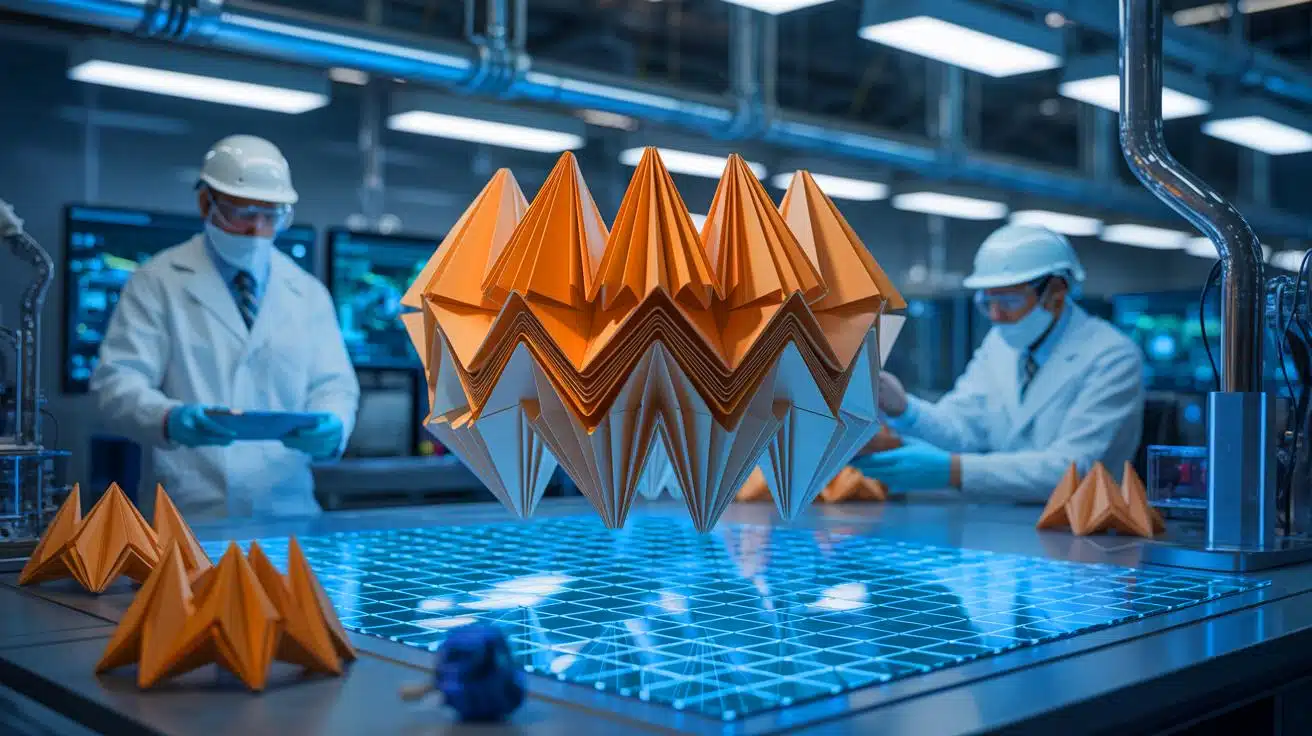
In a groundbreaking development, engineers at Princeton University have introduced a novel approach to designing origami-inspired structures. By integrating elastic components, these structures can change their shape and stiffness in response to external stimuli. This innovative method holds potential applications in diverse fields, from prosthetics to communication devices. Unlike traditional origami, which relies on fixed folding patterns, the new technique leverages geometric frustration to unlock a wider range of motion and adaptability. This advancement could revolutionize the way we approach the design of compact devices that require dynamic configurations.
The Science Behind Geometric Frustration
At the heart of this research lies the concept of geometric frustration. In the context of origami, this term refers to the intentional restriction of a structure’s natural motion to induce new behaviors. Traditionally, engineers have aimed to avoid frustration, as it can complicate design processes. However, the Princeton team, led by Professor Glaucio Paulino, views it as an opportunity to expand the possibilities of origami-based structures.
By deliberately frustrating the natural folds of origami, engineers can create structures that defy conventional limitations. This approach allows designers to achieve configurations not typically permitted by the geometry of the materials. As Professor Paulino explains, “Sometimes frustration is desirable.” This mindset has paved the way for innovations that were previously unattainable, leading to the development of structures that can react dynamically to environmental changes.
Elastic Components: The Key to Dynamic Origami
The introduction of elastic components has been a game-changer for this research. These components, when integrated into cylindrical origami structures known as Kresling cells, function like springs. They allow for precise control over the folding and unfolding of the structure. This control is achieved by manipulating the internal energy of the system through pre-stress.
Pre-stress refers to the intentional application of stress to the structure before it encounters external forces. By doing so, engineers can dictate how the structure will respond to stimuli. For instance, a twisting spring can be introduced to induce specific rotational movements, while a linear spring can compact or elongate the structure. This level of control opens up new avenues for designing materials with tailored properties, such as adjustable stiffness in prosthetic limbs or adaptable metasurfaces for optical devices.
Applications Across Diverse Fields
The potential applications of this technology are vast and varied. In the realm of prosthetics, the ability to adjust stiffness dynamically could lead to more comfortable and functional artificial limbs. A prosthetic leg, for example, could adapt its rigidity for different activities, providing stability on flat surfaces while offering flexibility for more complex movements like climbing stairs.
Similarly, in the field of telecommunications, the development of adjustable metasurfaces could revolutionize antenna design. These surfaces could reconfigure themselves to optimize signal reception under varying conditions. The research team also envisions applications in optics, where dynamic lenses and mirrors could enhance imaging capabilities. The versatility of this technology suggests that its impact could extend beyond these initial applications, influencing a wide range of industries.
Future Prospects and Challenges
Looking ahead, the researchers see immense potential for combining this origami system with other advanced materials and techniques. This could lead to the creation of responsive, modular devices that adapt to their surroundings. One such idea is a passive sunshade that opens and closes based on temperature changes, offering an energy-efficient solution for climate control.
However, challenges remain in scaling up these innovations for broader application. The complexity of designing structures with precise mechanical properties requires further refinement. Additionally, the integration of this technology into existing systems will necessitate collaboration across disciplines. As these hurdles are addressed, the promise of dynamic origami structures continues to grow, offering exciting possibilities for the future.
The research conducted at Princeton University has opened new avenues for the application of origami-inspired designs. By leveraging geometric frustration and elastic components, engineers have created structures with unprecedented adaptability. As these innovations continue to evolve, they prompt us to consider: how might this technology reshape our approach to design and functionality in the coming years?


Wow, un origami qui change de forme tout seul? C’est comme de la magie! 🪄
Wow, origami that’s not just for art anymore! Who would’ve thought? 🤯
How does geometric frustration actually help in controlling the shapes? 🤔
Est-ce que cette technologie pourrait être appliquée à l’architecture? Imaginez des bâtiments qui s’adaptent aux conditions climatiques !
Can this technology be used in robotics? That would be so cool! 🤖
C’est vraiment impressionant! Merci pour cet article fascinant. 😊
This is great, but how long until we see practical applications?
Je suis un peu sceptique. Comment s’assurer que les structures ne s’usent pas trop vite avec tous ces changements?
Merci Princeton pour cette innovation incroyable! 🙌
Peut-on espérer voir cette technologie dans les vêtements intelligents bientôt?
It’s amazing to see origami being used in engineering. Can’t wait to see where this goes! 🌟
J’ai toujours trouvé l’origami super compliqué. Maintenant, on ajoute de la frustration géométrique? 😅
Les structures en origami peuvent-elles être recyclées?
Quels types de matériaux sont utilisés pour fabriquer ces structures élastiques?
Sounds like a game changer for prosthetics! How soon can patients benefit? 🦾