




| IN A NUTSHELL |
|
In bustling urban centers across China, a unique solution has emerged to tackle the age-old problem of drinking and driving. This novel concept ingeniously combines modern technology with cultural nuances to address the issue without compromising safety or social obligations. Known as the “reverse Uber,” this service allows individuals to enjoy a night out without worrying about how to get their car home. By hiring a designated driver through a mobile application, patrons can ensure their vehicles and themselves are transported safely. This service, which has been gaining traction since its inception, highlights the intersection of innovation, culture, and legislation.
The Ingenious “Reverse Uber” Model
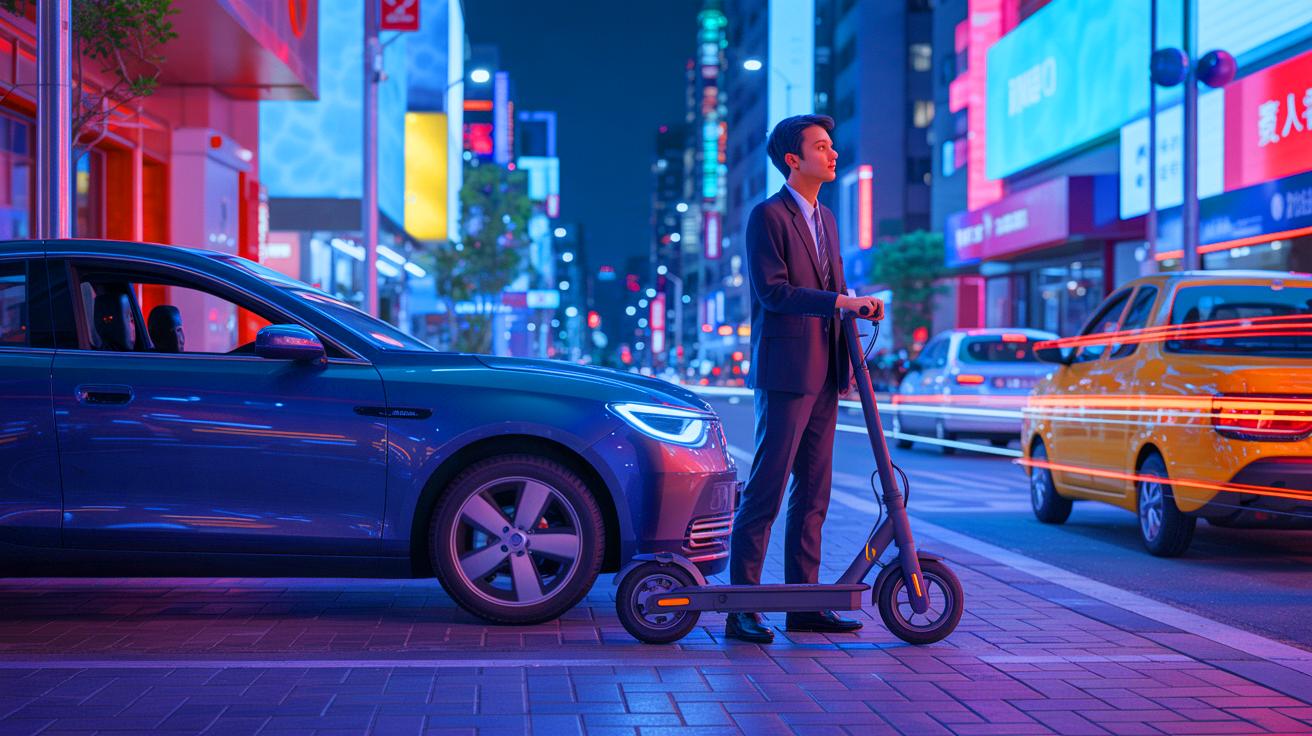
Forget everything you know about traditional ride-sharing services. In China, a groundbreaking model transforms the way people think about getting a ride home. Instead of ordering a car, users of this service order a driver. Through a mobile application, users select the “Designated Driving” option. The app pinpoints their location, and within minutes, a driver arrives—not in a typical service vehicle but on a folding electric scooter.
Upon arrival, the driver swiftly folds up the scooter and stows it in the trunk of the client’s car. This allows the driver to take the wheel and safely drive the patron home. Once they reach the destination, the driver retrieves their scooter and sets off to their next assignment. This clever logistical approach is made feasible by the proliferation of compact electric scooters and bicycles. It provides drivers with the flexibility to address their transportation needs while focusing on customer service.
A Cultural and Legal Convergence
The success of this service is no accident. It results from a unique blend of cultural traditions and stringent legal frameworks. In Chinese culture, especially in business settings, alcohol consumption is often considered a ritualistic activity essential for building trust and maintaining relationships. Refusing a drink can sometimes be seen as a social faux pas, potentially damaging professional ties.
Simultaneously, since May 1, 2011, China has implemented strict laws against drunk driving. Offenders face severe penalties, including license suspension, fines, and even imprisonment. This legislation has created a national dilemma: how to balance social drinking customs with legal prohibitions on driving under the influence. The designated driver services offer a practical solution, significantly impacting road safety. As Li Jiangping from the Ministry of Public Security notes:
“Most people have chosen to use designated driver services after drinking, with annual orders averaging 200 million.”
The Battle Between Didi and eDaijia
The market for designated driver services, known as “Daijia,” is a prime example of tech competition in China. eDaijia, the first major player, pioneered the service in 2011 and quickly established a dominant position with up to 90% market share before 2015. However, the landscape shifted dramatically with the entry of Didi Chuxing in July 2015. By integrating its service, Didi Daijia, into its existing ride-hailing app, Didi leveraged its massive user base for rapid adoption.
This strategic move disrupted the competitive balance, leading to intense price wars and service innovations. The figure of 200 million annual rides is not merely an economic statistic. It represents a public health success, highlighting the avoidance of countless potential accidents and tragedies every year. This achievement underscores the effectiveness of simple concepts, stringent laws, and innovative solutions.
The Future of Designated Driver Services
As the designated driver market continues to evolve, it raises questions about the future of transportation and safety. The widespread adoption of this service in China serves as a model for other countries grappling with similar issues. It demonstrates how technology can be harnessed to meet cultural and legal demands while enhancing public welfare.
The integration of designated driving services within existing platforms like Didi suggests a trend toward seamless user experiences and comprehensive solutions. As technology advances, these services may evolve further, incorporating additional safety features or expanding to new markets. The question remains: how will other nations adapt and innovate to address the global challenge of drinking and driving?


Quelle idée brillante ! Combiner technologie et sécurité pour éviter les accidents, bravo ! 😊
Wow, this is such a clever idea! Why didn’t anyone think of this sooner? 🤔
Comment les conducteurs sont-ils payés pour ce service ? Est-ce rentable pour eux ?
Est-ce vraiment sûr de laisser un étranger conduire sa voiture après une soirée arrosée?
Est-ce que ce modèle pourrait fonctionner dans d’autres pays ? 🤔
J’adore l’idée, mais je suis curieux : que se passe-t-il si le conducteur n’arrive pas à plier le scooter correctement?
J’adore l’idée de la scooter pliable, c’est si pratique !
Pourquoi n’avons-nous pas encore ce service dans notre pays ?
200 million rides a year is impressive! But how do they manage quality control with so many drivers?
200 million de trajets par an ? C’est incroyable !
Est-ce que ce service est disponible 24h/24 et 7j/7? Ce serait vraiment utile pour les noctambules!
Je suis un peu sceptique… Que se passe-t-il si le client est trop ivre pour diriger le chauffeur chez lui ?
I’ll definitely use this service if it ever comes to my country! 🍻
Bravo à Didi et eDaijia pour avoir rendu nos routes plus sûres.