





| IN A NUTSHELL |
|
In the realm of robotics, the ongoing quest to replicate human dexterity and precision has taken a significant leap forward. AgileX Robotics has recently showcased its latest innovation: a robotic system that pairs the PiPER robotic arm with the Chius robotic hand. This cutting-edge combination exhibits an impressive ability to perform intricate laboratory tasks with a level of finesse and adaptability that closely mimics human actions. The demonstration not only highlights the potential for enhanced automation in scientific environments but also raises intriguing questions about the future role of robotics in everyday human tasks.
Automation with Finesse
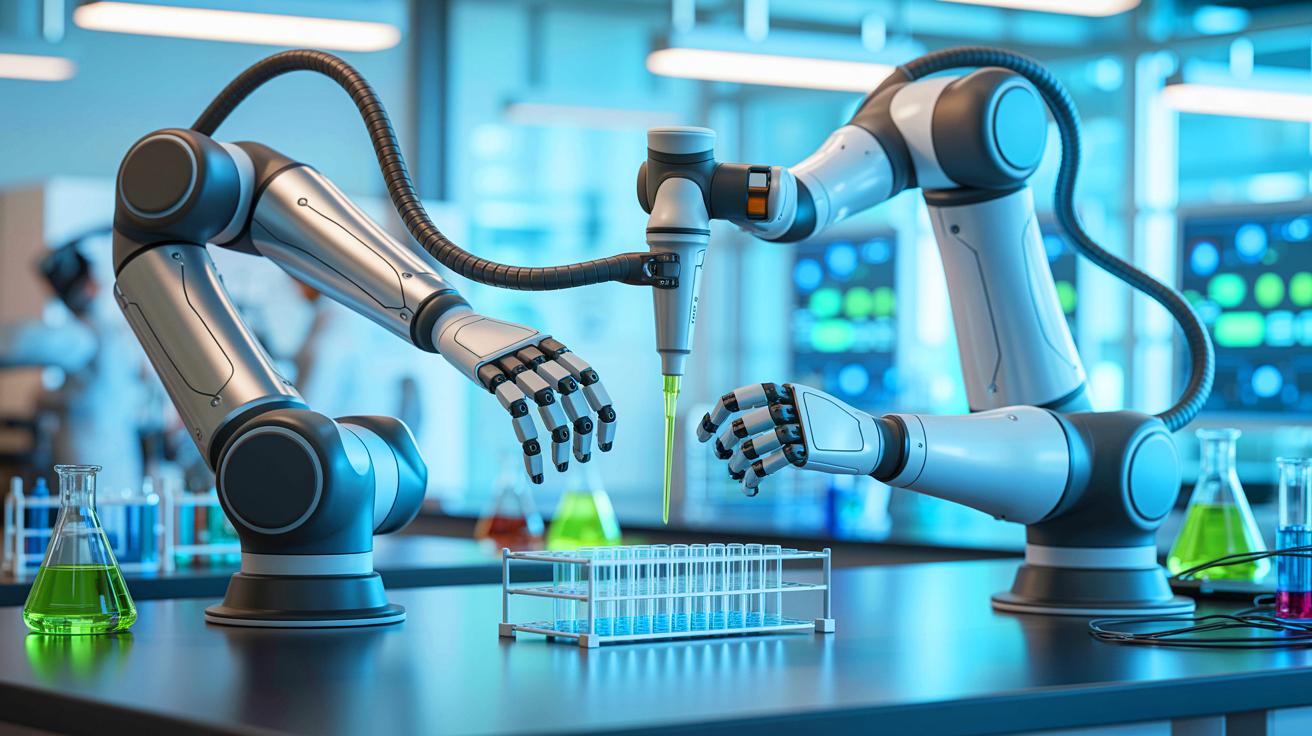
AgileX Robotics has made a noteworthy contribution to the field of robotics with its recent demonstration of the PiPER robotic arm paired with the Chius robotic hand. Developed by the Chinese firm Lingxin Qiaoshou, this robotic hand is renowned for its dexterity. In the demonstration, the duo performed a series of complex laboratory tasks that required human-like precision and adaptability. The PiPER arm and Chius hand handled a spoon with natural fluidity, transitioned seamlessly into pipetting—a task that demands steady control—and demonstrated the system’s suitability for delicate laboratory procedures.
The system’s capabilities were further showcased as it performed bottle decapping and capping operations, which require precise force control to prevent damage or spillage. Additionally, the robotic system adeptly shook stoppered test tubes, exemplifying its adaptability to various lab workflows. Through these tasks, the PiPER and Chius combination underscored its potential to improve efficiency, safety, and consistency in scientific and industrial environments. This demonstration signifies a major step forward in advanced lab automation.
Dexterity Meets Precision
The PiPER robotic arm, a product of AgileX Robotics, is a marvel of engineering, designed to perform with exceptional precision. Weighing just 9.26 pounds, it is lightweight yet capable of lifting up to 3.3 pounds. With a reach of approximately 24.6 inches, PiPER is crafted from a durable aluminum-alloy frame and a robust polymer shell, ensuring reliable performance across diverse environments. It operates with an impressive accuracy of ±0.1 millimeters, making it ideal for repetitive tasks that require meticulous attention to detail.
This robotic arm can withstand a broad range of temperatures, from –4 °F to 122 °F, as reported by Techeblog. It features built-in joint motors that facilitate smooth movements and intelligent path planning. Users can control PiPER through various methods, including drag-teaching, offline programming, and Python integration, offering flexibility in different operational contexts. The robotic arm uses a CAN connection for communication, while its tablet-based interface simplifies programming, making it user-friendly for operators.
Innovations in Robotic Hands
A crucial component of the system’s success is the Chius robotic hand, developed by Lingxin Qiaoshou. This hand is known for its ultra-flexible design and high degree of freedom (DoF), allowing it to replicate complex human hand movements. The Chius hand’s adaptability and precision make it an essential tool for tasks that require intricate manipulation. By working in tandem with the PiPER arm, it can perform tasks such as pipetting and bottle handling with ease, showcasing a level of cooperation and coordination that is rare in robotics.
Such innovations are pivotal in advancing the capabilities of robotic systems, particularly in environments that require delicate interactions. The potential applications of this technology extend beyond laboratories, offering solutions in fields such as healthcare, manufacturing, and service industries. The ability to perform tasks with human-like dexterity opens new avenues for automation, where robots can not only assist but potentially replace humans in repetitive or hazardous tasks.
Future Prospects and Challenges
As robotics technology continues to evolve, the integration of systems like the PiPER arm and Chius hand into everyday applications presents both opportunities and challenges. On one hand, these advancements promise to revolutionize industries by enhancing efficiency and reducing human error. They can perform tasks that require a high degree of precision and consistency, thereby improving overall productivity. On the other hand, the rise of such sophisticated systems raises questions about the potential impact on the workforce and the ethical considerations of replacing human labor with machines.
As we look to the future, the challenge will be to balance technological advancements with societal needs. The development of policies and frameworks to address the implications of increased automation will be crucial in ensuring that these technologies benefit, rather than disrupt, human livelihoods. How will society adapt to the growing presence of robots in daily life, and what measures will be necessary to integrate these advancements responsibly?
The advancements demonstrated by AgileX Robotics with the PiPER arm and Chius hand are a testament to the potential of robotics to transform how we approach complex tasks. These innovations not only enhance efficiency in laboratory settings but also pave the way for broader applications across various industries. As we consider the future of robotics integration, the question remains: How can we harness the power of these technologies to complement human efforts rather than replace them?


Wow, this is like something out of a sci-fi movie! 🤖 How long before these robots take over all lab jobs?
La précision de ce bras robotique est impressionnante! Quel est le coût d’un tel système? 🤔
J’espère qu’ils ne vont pas remplacer tous les travailleurs humains. 😟
Est-ce que le bras PiPER peut être programmé pour d’autres tâches ou est-il limité aux laboratoires?
C’est incroyable de voir à quel point la technologie a évolué. Merci pour cet article fascinant!
Quelle est la durée de vie de ces robots? J’imagine que les réparations doivent être coûteuses.
Les robots pourraient-ils un jour remplacer les médecins aussi? Ça me fait un peu peur… 😅
J’adore l’idée de réduire les erreurs humaines, mais qu’en est-il des erreurs robotiques?
C’est une avancée majeure pour la science! 🧪 Comment ce système se compare-t-il à d’autres robots sur le marché?