





| IN A NUTSHELL |
|
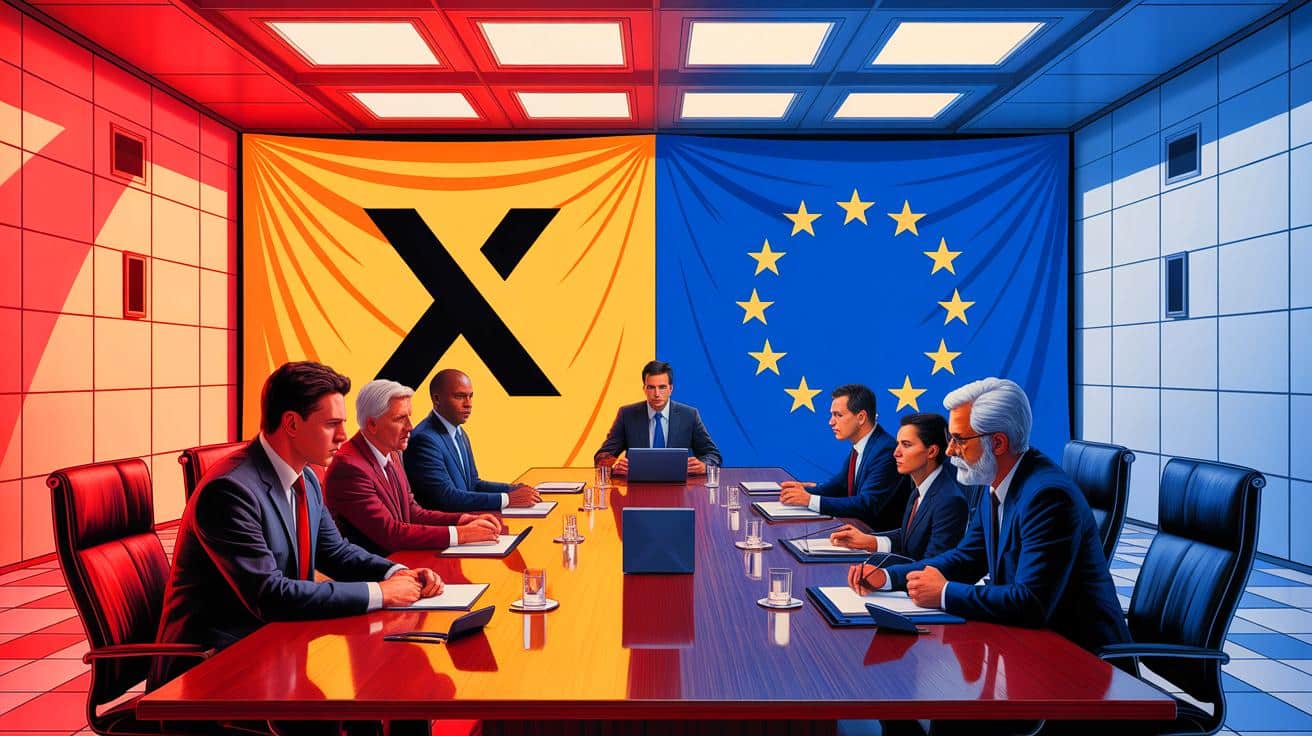
X, the social media company, has recently come under fire from the European Commission, leading to a significant €120 million ($140 million) fine. This penalty marks the first under the European Union’s Digital Services Act, highlighting concerns over X’s blue checkmark system and advertising repository. The commission criticized the platform for its paid verification system, which they claim could expose users to potential scams and impersonation. Meanwhile, X’s advertising repository allegedly failed to meet transparency standards required by the DSA. The company now faces a tight deadline to address these issues or risk further penalties, escalating tensions between the tech giant and European regulators.
The European Commission’s Concerns
The European Commission’s fine against X underscores the growing scrutiny over digital platforms and their operations within the EU. At the heart of the commission’s concerns is X’s blue checkmark verification system. This system, according to the commission, can mislead users, making them more susceptible to impersonation and scams. Such vulnerabilities contravene the principles of user safety and trust that the Digital Services Act aims to enforce.
Furthermore, the commission took issue with X’s advertising repository. The repository reportedly lacks the transparency and accessibility mandated by the DSA, raising questions about how advertising data is managed and presented to users. The commission has given X a 60-day window to address the blue checkmark concerns and 90 days for the advertising repository issues. Failure to comply could lead to additional fines, placing X under significant pressure to align with EU regulations.
Elon Musk’s Reaction and the Aftermath
The response from X, particularly from its owner Elon Musk, was swift and controversial. Musk publicly dismissed the fine as “bullshit” and went so far as to question the future of the European Union itself. His comments reflect the growing tension between tech giants and regulatory bodies, as platforms like X navigate the complex landscape of international compliance.
Nikita Bier, X’s Head of Product, also criticized the commission, accusing it of exploiting X’s advertising system. Bier claimed that the commission logged into a dormant ad account to misuse an exploit in X’s Ad Composer. This exploit allegedly allowed the commission to post deceptive links, artificially boosting their reach. In retaliation, X deactivated the commission’s ad account, arguing that the commission violated the platform’s rules.
The Commission’s Stance and Response
The European Commission has defended its actions, asserting that it engages with social media platforms in good faith. A spokesperson clarified that the commission used the tools available on the platforms, like X’s Post Composer, while adhering to the platforms’ terms and conditions. The commission emphasized that it expects these tools to align with both the platforms’ rules and the overarching legislative framework.
Despite X’s deactivation of its ad account, the commission remains firm in its stance. It has suspended paid advertising on X since October 2023 and continues to stand by its decision. The commission’s actions highlight its commitment to enforcing the Digital Services Act and holding platforms accountable for their practices.
Future Implications for Social Media Regulation
This clash between X and the European Commission could have broader implications for how social media platforms operate under international regulations. The EU’s Digital Services Act represents a significant shift towards stricter oversight of digital platforms, aiming to create a safer and more transparent online environment. The fine against X serves as a warning to other tech companies about the importance of compliance with regional laws.
The outcome of this dispute could influence future regulatory measures and shape the relationship between tech giants and governments. As digital platforms continue to evolve, they must balance innovation with regulatory compliance to maintain user trust and avoid potential penalties. The situation with X highlights the ongoing challenges and negotiations that define the intersection of technology and regulation.
As X and the European Commission continue to navigate their differences, the tech industry watches closely. The outcome will likely influence how digital platforms approach compliance and user safety in the future. How will tech companies adapt to this evolving regulatory landscape, and what role will governments play in shaping the future of digital services?


Pourquoi X ne se conforme-t-il pas simplement aux réglementations de l’UE ? 🤔
Est-ce que la Commission européenne va maintenant boycotter X ? 🤔
Merci pour cet article, c’était très informatif !
Elon Musk a-t-il raison de critiquer le montant de l’amende, ou est-ce juste un coup de pub ?
Elon Musk a vraiment le don de faire des vagues, hein ? 😅
Je suis curieux de voir comment cela va affecter les relations entre X et l’UE à long terme.
120 millions d’euros, c’est pas un peu exagéré comme amende ?
Musk a qualifié l’amende de “bullshit”, mais c’est peut-être lui qui est dans le déni.
Je me demande si d’autres plateformes suivront le même chemin que X.
La Commission européenne a pris une position audacieuse, j’espère qu’elle ne cédera pas sous la pression !
La réaction de Musk est-elle vraiment justifiée ?
Quel impact cela aura-t-il sur d’autres plateformes sociales ? 🤨